- Gainesville, FL
- Job Address:
1600 SW Archer Road/Box 100247
Gainesville, FL 32610-0247
- Contact Name:
Co-Directors: Li-Ming Su, MD, Padraic O'Malley, MD, Tarik Benidir, MD
- Type/Focus:
Robotic Surgery & Minimally Invasive Urologic Oncology
- Duration:
1 Year
- Salary:
PGY 6 Level for the University of Florida
- Country:
United States
- Phone:
352-265-9052
- Region:
North America
- Contact Email:
This email address is being protected from spambots. You need JavaScript enabled to view it.
Program Overview
The Robotic Surgery and Minimally Invasive Urologic Oncology (RSMIUO) Fellowship at the University of Florida (UF) is a comprehensive, yet flexible, multidisciplinary training opportunity that provides fellows the chance to learn from fellowship-trained leaders in both the Endourological Society and Society of Urologic Oncology who have mastery in laparoscopic and robotic surgery as well as focal therapy. In addition, our team has a strong history of excellence with both investigator-initiated, industry-sponsored, and co-operative group clinical trials within the NCI-designated UF Health Cancer Center (UFHCC).
Fellowship Program Faculty (click hyperlink for individual faculty department video introduction):

Tarik Benidir, MD, MSc, FRCSC
Residency: University of Toronto
Fellowship: Glickman Urological and Kidney Institute, Cleveland Clinic (SUO)
Dr. Benidir is an Assistant Professor of Urology and the Director of the Prostate Cancer Advisory Council of Florida. His surgical practice is based out of University of Florida (UF) Shands Hospital as well as the Florida Surgical Center. At Shands Hospital, Dr. Benidir performs robotic prostate, kidney, upper tract and bladder oncologic surgeries. This includes robotic urinary diversions for bladder cancer patients. At the Florida Surgical Center, Dr. Benidir performs MRI/3D US fusion transperineal prostate biopsies and has a robust focal therapy program including high-intensity focused ultrasound (HIFU), TULSA and Irreversible electroporation (Nanoknife).
From a research standpoint, Dr. Benidir is involved in several clinical trials in bladder and prostate cancer at our NCI designated Cancer Center here at UF and is the lead investigator on a reproductive organ sparing Radical Cystectomy trial. He is interested in prostate imaging, theranostics, and biomarker research for prostate cancer and focal therapy management.

Padraic O'Malley, MSc, MD, FRCSC
Residency: University of Toronto
Fellowship: New York Presbyterian - Weill Cornell Medical College (SUO)
Dr. O’Malley is an Associate Professor and Chief of the Division of Urologic Oncology, as well as chair of the robotic surgery program at UF. His surgical practice involves robotic bladder, kidney, and testicular surgery. He performs robotic cystectomy with intracorporeal diversions for bladder cancer; complex partial nephrectomy including clampless, sutureless approach with multiport and SP platforms; robotic caval thrombectomy; and robotic retroperitoneal lymph node dissection for testicular cancer.
From a research standpoint, Dr. O’Malley is involved in several clinical trials in bladder and kidney cancer at our NCI designated Cancer Center here at UF and is the lead investigator on a trial of a novel surgical approach to partial nephrectomy. He is interested in biomarker research for bladder cancer in detecting minimal residual disease and developing novel biomarkers for renal cell carcinoma.
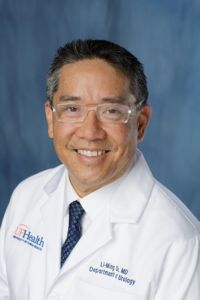
Li-Ming Su, MD, FRCS (Glasg)
Residency: New York Presbyterian – Weill Cornell Medical College
Fellowship: James Buchanan Brady Urological Institute, Johns Hopkins Hospital (Endourological Society)
Dr. Su is Professor and Chair of Urology at UF as well as the current Secretary General of the Endourological Society. He is strongly committed to the UF RSMIUO fellowship program, in particular, with regards to the provision of a structured training program of progressively increasing responsibilities in robotics and minimal invasive surgery. He has a central role for the robotic assisted laparoscopic experience, with regards to prostate and renal surgery and also provides mentorship for clinical research. As an internationally recognized leader in minimally invasive surgery his experience and leadership have helped to bring together an accomplished group of urologic oncologists who provide MIS approaches to complex urologic malignancies in a compassionate and patient centered approach utilizing their diverse training backgrounds and philosophies. This translates in to a uniquely diverse and robust training experience for the RSMIUO fellowship, guided by faculty mentors, some of whom received fellowship training through the Endourological Society while others through the Society of Urologic Oncology.
His research interests are in advanced imaging in urologic malignancies especially in renal tumors. He is actively involved in continued mentorship of residents, fellows, faculty and promotes a team-based approach to clinical and research goals that has fostered the collaborative and collegial environment that exists at UF Health Urology.

Paul L. Crispen, MD
Residency: Temple University School of Medicine
Fellowship: Mayo Clinic – Rochester (SUO)
Dr. Crispen is a Professor of Urology and the Associate Director of Clinical Research for UF’s NCI designated cancer center. He completed his urology residency at Temple University followed by an SUO fellowship at the Mayo Clinic in Rochester, Minnesota. Dr. Crispen’s clinical focus is in urothelial carcinoma (bladder and upper tract). He performs a large volume of TURBTs, radical cystectomies and nephroureterectomies for urothelial carcinoma.
His research interests are in leading our clinical trials Genitourinary Disease Site Group, serving as a principal site investigator on many landmark bladder cancer trials and leading UF to be one of the highest recruiting bladder cancer trial sites. He provides significant mentorship to other faculty in helping them design and carry out investigator-initiated trials. He has extensive collaborations with translational and basic science investigators primarily focused on the tumor-immune microenvironment and novel therapeutic strategies based on these interactions.

Jason P. Joseph, MD
Residency: Mayo Clinic – Rochester
Fellowship: University of Florida (Endourological Society)
Dr. Joseph is an Assistant Professor of Urology and the Director of UF Urology residency program. He completed his Urology residency at Mayo Clinic in Rochester, Minnesota, and fellowship in MIS and Endourology at UF. Dr. Joseph’s clinical focus is in robot-assisted surgery for both urologic cancers (prostate cancer, kidney cancer, upper tract urothelial carcinoma), as well as benign urologic conditions (upper tract reconstruction, robot-assisted simple prostatectomy).
His research interests are in machine learning and imaging of prostate cancer, as well as strategies for advancing surgical education. His approaches harness novel artificial intelligence approaches to common clinical questions in urological oncology.
Fellowship Program Description
The University of Florida Urology Robotic Surgery and Minimally Invasive Urologic Oncology Fellowship (RSMIUO) is structured to provide a comprehensive and balanced one-year experience in advanced clinical training, multidisciplinary care and research. During the year, trainees will spend time on clinical rotations and will be directly involved in the management of patients with various urologic malignancies and will be exposed to a broad spectrum of minimally invasive surgical procedures including:
- Prostate
- High volume prostate surgery center with dedicated teaching team (>150 prostatectomy/year)
- Robotic prostatectomy with various approaches: anterior, posterior, Retzius-sparing and Hood technique
- Robotic salvage prostatectomy experience
- da Vinci multiport and SP platform
- Fusion and transperineal biopsy experience (opportunity to learn micro-ultrasound)
Mentors: Benidir, Joseph, Su
- Focal Therapy
- High intensity frequency ultrasound (HIFU)
- Irreversible electroporation (IRE)
- Transurethral ultrasound ablation (TULSA)
- Cryoablation
Mentor: Benidir
- Kidney
- Robotic and laparoscopic radical nephrectomy, nephroureterectomy, partial nephrectomy, and caval thrombectomy (>300 renal cases/year)
- Transperitoneal and retroperitoneal approaches (traditional, SARA)
- da Vinci multiport and SP platform
Mentors: Benidir, Crispen, Joseph, O’Malley, Su
- Bladder
- Advanced understanding of urothelial carcinoma
- Clinical trials: learn the ins and outs of running clinical trials effectively and receive mentorship in designing investigator-initiated trials
- Robotic radical cystectomy, robotic partial cystectomy (>50 radical cystectomy alone/year)
- Intracorporeal (and extracorporeal) urinary diversions: conduit, Indiana pouch, neobladder
- da Vinci multiport and SP platform
- Transurethral resection of bladder tumors (Blue light)
- Nephron sparing endoscopic approaches (Thulium)
Mentors: Benidir, Crispen, O’Malley
- Testis
- Robotic retroperitoneal lymph node dissection
- Transperitoneal, da Vinci multiport
Mentors: O’Malley
The clinical program is designed to provide the fellow with a practical knowledge of the most up-to-date and cutting-edge methods of diagnosing and treating all types and stages of these urologic malignancies. The fellowship faculty have significant experience in all aspects of urologic oncology, focal therapy, laparoscopy, and robotic surgery, allowing for tailoring of the training experience based upon each individual fellow's strengths and perceived areas of interest.
Rotation Schedule
The fellow will have the opportunity to rotate and operate with each of the fellowship faculty throughout the year based on a schedule tailored to maximize the fellow’s clinical experiences both in the operating room as well as clinic environment. This allows for continuity of care and mentorship with specific faculty throughout the year.
In general, the fellow will have 3 operative, one independent clinic/OR day and 1 research day per week. However, this may vary according to research projects chosen, fellow-specific planning with the involved faculty, and clinical needs of the department.
In addition, as per the RSMIUO guidelines there will be dedicated time spent with medical oncology, radiation oncology, pathology, and radiology to create a solid oncologic foundation of understanding of disease biology and therapeutic options.
Teaching Responsibilities
The fellow will have an integral role in the Department of Urology and will serve as a junior faculty member including admitting and operative privileges as well as taking an equal share of faculty call responsibilities. The fellow will have incremental and independent surgical responsibility under the guidance of the fellowship directors. This responsibility will require a foundational level of technical skill and decision-making ability, as fellows are expected to progress towards independent surgical proficiency.
The fellow is also expected to participate in our departmental weekly teaching conferences. The fellow also has a formal role in the didactic curriculum of the residency program by giving lectures on genitourinary disease as it pertains to minimally invasive surgery and oncology. The fellow will give Urology Grand Rounds at some point during their fellowship year on a topic of their choice.
The program further encourages collaboration of the fellow with residents on design, conduct, presentation and publication of research projects in which they have the opportunity to assume a mentorship role.
The fellow will be expected to be involved with and ultimately, towards the end of the year, lead the Genitourinary Multidisciplinary Tumor Boards (bi-weekly) sessions. They will also be expected to be involved in the weekly GU Oncology Clinical Trials meetings as well as attend the UFHCC’s Investigator Initiated Trials Think Thank meetings (monthly).
Clinical Training
Robotic Surgical Training
For laparoscopy/robotics surgery training, the fellow will learn a variety of minimally invasive surgical techniques including both conventional laparoscopy and robot-assisted laparoscopy. At UF both multiport and SP platforms are in use with 8 Xi and 1 SP robot platforms available (additional Xi and DV5 platform expect Q4 2024).
Rotations will be grouped by disease site. For urothelial carcinoma, focus will be on robotic cystectomy and intracorporal diversions as well as robotic nephroureterectomy. Opportunities to develop endoscopic skills and technical knowledge base with techniques such as blue light cystoscopy and thulium laser enucleation/ablation will also be available.
Kidney cancer involves large volume partial nephrectomy and radical nephrectomy experience with robotic caval thrombectomy routinely used for Level I & II tumor thrombus cases and for select Level III cases. Multiport and SP platforms will both be used routinely for partial nephrectomy cases as well as transperitoneal, retroperitoneal, and supine anterior retroperitoneal approaches.
Training to perform robotic prostatectomy and salvage prostatectomy will include various surgical approaches including posterior and anterior approaches as well as modified Hood techniques and Retzius sparing approaches. Multiport platforms are used almost exclusively but there is growing opportunity for SP approaches too. Trans-rectal biopsy is employed but by in large most biopsies are performed transperineally and fusion training is available. In addition, micro-ultrasound is also available and offered.
Training involves not only hands on operative case volume but also includes multifaceted approach utilizing didactic, video, simulation and step wise hands-on training on both the da Vinci multiport and SP robotic systems. As the pace of progression in our program is swift and demands a high level of initial surgical competence, ideal candidates should have a solid foundation in surgery from residency training. Our training framework is specifically tailored to build upon these foundational skills, with a focus on advanced training in enhancing and refining surgical technique to a high level of proficiency. Our approach is designed to ensure that by the end of their fellowship, our trainees are thoroughly prepared and adept at independently managing the intricacies, nuances and challenges of robot-assisted and laparoscopic surgery for oncological cases.
Though it may vary from year to year, fellowship related procedures performed annually by the faculty include >65 focal therapy procedures (estimate), >350 upper tract procedures ( partial nephrectomy, nephrectomy +/- caval thrombus, nephroureterectomy, RPLND), and >300 lower tract procedures (prostatectomy, cystectomy, partial cystectomy).
Focal Therapy Training
UF health Urology is ranked the highest category for prostate cancer surgery by US news and World Report. This is because we believe in training not just robotic experts, but also comprehensive prostate cancer surgeons, both in whole gland, and in focal therapy.
UF health’s focal therapy program will allow you to master evaluation of imaging (mpMRI, PET), acquisition of fusion and prostate segmenting through fusion software devices, and software fusion transperineal prostate biopsy. Through this, the fellow will harness the skills of understanding patient selection for focal therapy in general, as well as nuanced selection for various focal therapy modalities offered at UF.
Currently UF health performs various focal therapy treatment modalities including High Intensity Focused Ultrasound (HIFU) and Irreversible Electroporation (IRE) in both the primary and salvage setting. In the coming months, and prior to your arrival, we will also be introducing Cryotherapy to our robust patient population. Current patient numbers include approximately 4 HIFU cases per month, 2 IRE per month for a total of 6 focal cases per month. With the addition of cryotherapy, this total is expected to grow to 8-9 per month.
From a research perspective, while not mandated, we do have clinical trials in the focal therapy space and industry sponsored trials, including salvage HIFU for radio recurrent prostate cancer which you could be intimately involved in.
As such, our goal for your focal therapy training is to feel comfortable offering all modalities of prostate cancer care to your future patients. With exposure to hundreds of potential candidates and with the possibility of >65 focal cases annually, your confidence with these therapies is our mission.
Research
An advanced understanding of the principles of clinical research is essential to an evidence-based practice of urology as well as the fellow’s efforts to advance the field through high quality and impactful discoveries. The fellow will gain further experience in this area by interacting at departmental research conferences and through interactions with individual mentors. The research experience will also provide the fellow with an ideal background for academic success but also for those seeking a less traditional academic role whether that be in private practice or large urology group practice association (LUGPA) setting.
Opportunities for clinical, translational and basic science research are available. During the year, fellows are expected to devise a research project under the guidance of fellowship faculty and carry their research to completion, culminating in their fellowship essay manuscript. This project should be of the quality to be published in a peer-reviewed journal. In addition as per the Endourology guidelines a second publication is expected to Journal of Endourology.
Clinical trials are a major component of our urologic oncology practice at UF. This provides an incredible environment for clinical trials mentorship and learning. Involvement with our weekly clinical trials meetings, the Cancer Center’s Investigator Initiated Trial Think Tank, and clinical practice will give trainees unparalleled exposure to clinical trials functionality and training. Amongst all disease site groups at the UF Health Cancer Center, the genitourinary group has been a consistent leader in trial enrollments. Wonder how to run a clinical but have never been taught? Not an uncommon scenario for most urologists. This program will provide strong mentorship and education so that you are equipped to do so from day one when you go into practice.
Upon completion of the fellowship program, the trainee will be able to meet the standard requirements for certification by the Endourological Society for robotics/laparoscopy. The fellow will be expected to maintain an accurate and comprehensive operative log through the Endourological Society case log system and will review this with the program director(s) on a routine basis.
Applicants must have completed an approved US residency training program in urology and must submit an application along with a current curriculum vitae and supply a minimum of three letters of recommendation.
Official Program Training Dates
The Robotic Surgery and Minimally Invasive Urologic Oncology (RSMIUO) fellowship program is a one-year program that will begin July 1 of each academic year and will end June 30.
Salary
The clinical status of the fellow will be a PGY6 level for the University of Florida.
2024-2025 Salary
|
PGY
|
Annual
|
Bi-weekly
|
|
6
|
$77,272.00
|
$2,960.61
|
|
7
|
$80,193.00
|
$3,072.53
|
Application to the Program
If you are interested in applying for the Fellowship Program, please visit the Endourological Society’s website, www.endourology.org to download and complete the application. After completion, you should forward either a pdf or paper copy of the application, along with your curriculum vitae, to the University of Florida at the following address:
Padraic O’Malley MSc, MD, FRCSC
University of Florida College of Medicine, Department of Urology
RSMIUO Fellowship
1600 SW Archer Road/Box 100247
Gainesville, FL 32610-0247
PDF may be emailed to: This email address is being protected from spambots. You need JavaScript enabled to view it.
Hospital Overview
With campuses in Gainesville and Jacksonville, the UF and Shands Hospital (UF Health) includes six health colleges, six research institutes, two teaching hospitals, two specialty hospitals and a host of physician medical practices and outpatient services throughout north central and northeast Florida. Our mission is to promote health through outstanding and high-quality patient care, innovative and rigorous education in the health professions and biomedical sciences, and high-impact research across the spectrum of basic, translational and clinical investigation.
Nearly 900 expert UF College of Medicine and community physicians along with more than 8,000 skilled Shands nursing and support staff provide comprehensive high quality patient care, from primary care and family medicine to subspecialty tertiary and quaternary services for patients with highly complex medical conditions. The faculty from the UF College of Medicine includes nationally and internationally recognized physicians whose expertise is supported by intensive research activities. Shands’ affiliation with the UF Health Science Center (HSC) allows patients to benefit from the latest medical knowledge and technology.
The UF Department of Urology offers advanced care in all aspects of both pediatric and adult urology and is the premiere academic urology program in the state of Florida and a leading center in the Southeast.
The HSC is the country’s only academic health center with six health-related colleges located on a single, contiguous campus. The HSC is also a world leader in interdisciplinary research, generating 52% of UF’s total research awards.
Our vision as a preeminent academic health center is to optimize our collective expertise to improve patient care, education, discovery and the health of the community. Our success is predicated on research-based, multidisciplinary, cross-college programs. The colleges teach the full continuum of higher education from undergraduates to professional students to advanced post-doctoral students.
The UFHCC is an NCI designated cancer center with over 350 members, clinicians and educators throughout UF which was ranked the No 1 public institution in the 2024 Wall Street Journal’s Best US Colleges list. We serve a large 23 county area in north central Florida with an older population meaning an increased number of oncology patients. Members of the cancer center have appointments in 72 departments across 11 colleges within UF. This reflects the tremendous multidisciplinary approach to cancer care at our center. With NCI designation obtained in 2023 we have already seen an unprecedented acceleration in growth of cancer care at our center.


